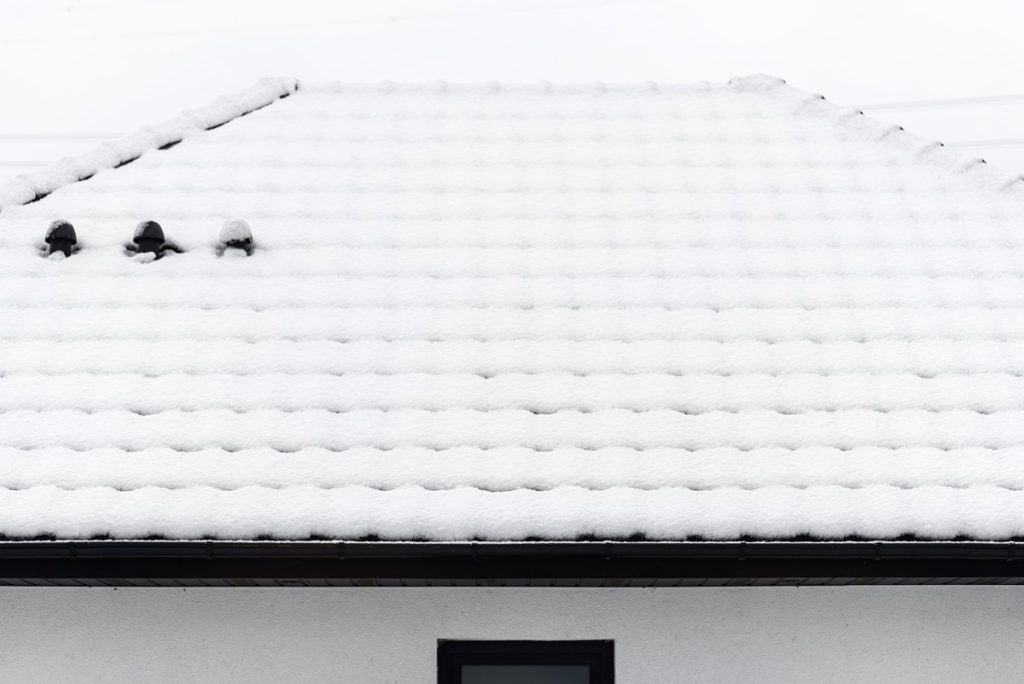
Winter is also a testing ground for your roof. When snow starts piling up or ice forms after a sudden freeze, your roof bears the brunt of the season’s wrath.
Here’s the kicker: not just one big event like a blizzard that causes trouble. The real damage often creeps in gradually, leaving you with a hefty repair bill before you notice something wrong.
Instead of dismissing snow and ice as “part of winter,” let’s examine how they affect your roof.
The Weight of Snow: More Than Just an Aesthetic Problem
Snow might seem light and fluffy when it’s falling, but let me tell you—once it accumulates, it’s anything but. A single cubic foot of packed snow can weigh up to 20 pounds, and wet snow? That number can easily double. Your roof is designed to handle a load, but every structure has its limit.
Here’s what happens when the load exceeds that limit:
- Sagging Rafters
Snow creates downward pressure, which can bend or even break the internal support structures of your roof. This is especially risky for older homes or roofs that haven’t been maintained in years. - Shingle Damage
Under the weight of snow, shingles can crack, curl, or even shift out of place. Carrying a heavy backpack for days eventually wears you down. - Compromised Insulation
If your roof sags or leaks under heavy snow, your insulation could also be affected. Damaged insulation lets heat escape, which can lead to ice dams (more on that in a second).
The Silent Killer: Ice Dams
Ice dams are not as dramatic as a collapsed roof but equally dangerous. Ice dams form when heat escapes through your roof, melting snow at the top. The melted snow runs down toward the eaves, where it refreezes because the edges of your roof are colder. Over time, this creates a wall of ice that traps water behind it.
Water trapped by an ice dam has nowhere to go, so guess what? It finds its way into your roof. Here’s where the damage unfolds:
- Rotting Wood
Prolonged exposure to moisture softens the wooden decking under your shingles. Rot spreads fast; before you know it, you’re replacing whole roof sections. - Interior Leaks
That trapped water doesn’t just stay in your roof. It seeps into your attic, your walls, and even your ceiling. What starts as a small drip can turn into significant water damage over time. - Compromised Gutters
Ice dams can also ruin your gutter system. As water freezes and expands, it strains your gutters, causing them to bend, crack, or detach altogether.
Freeze-Thaw Cycles: The Repeated Assault
Another sneaky culprit is the freeze-thaw cycle. You’ve seen it happen when snow melts during the day and refreezes at night. While this might seem harmless, the constant expansion and contraction can exploit even the tiniest vulnerabilities in your roof.
Here’s how:
- Cracking Shingles
Repeated freezing and thawing causes shingles to become brittle, making them more likely to crack or break. - Widening Gaps
If your roof already has a small gap or crack, the freeze-thaw cycle can worsen it. Over time, these tiny openings can become large enough to let water in. - Flashing Failure
Flashing—the metal pieces that seal the edges and joints of your roof—is particularly prone to damage from freeze-thaw cycles. When it fails, water can seep into areas it shouldn’t, like around chimneys or skylights.
What Can You Do About It?
Now that you know the risks, let’s talk solutions. You can’t stop winter from happening, but you can protect your roof. Here’s my advice:
- Schedule an Inspection Before Winter Hits
A professional inspection can identify vulnerabilities in your roof before snow and ice become a problem. - Clear Snow Safely
Use a roof rake to remove excess snow from the edges of your roof. Never climb onto your roof in icy conditions—it’s not worth the risk. - Improve Your Attic’s Insulation
Good insulation keeps heat where it belongs: inside your home. This reduces the risk of ice dams and lowers your heating bill. - Invest in a Quality Roof
If your roof is nearing the end of its lifespan, consider replacing it with a durable material designed to withstand harsh winters. - Monitor After Storms
After a snowstorm, check for sagging areas, icicles (a sign of ice dams), or leaks inside your home. Early detection saves you money.
Don’t Let It Unchecked
Snow and ice aren’t just minor nuisances—they’re significant stressors for your roof. Left unchecked, they can cause costly and time-consuming damage to fix. But with the proper preventative measures and some know-how, you can weather the storm (pun intended) without breaking a sweat.
If you’re looking for expert help, don’t leave it to chance. With over 21 years in roofing, I know exactly what it takes to keep your roof in top shape, no matter how brutal the winter gets.
Feel free to contact Brothers Construction III Corp. for all your roofing needs.